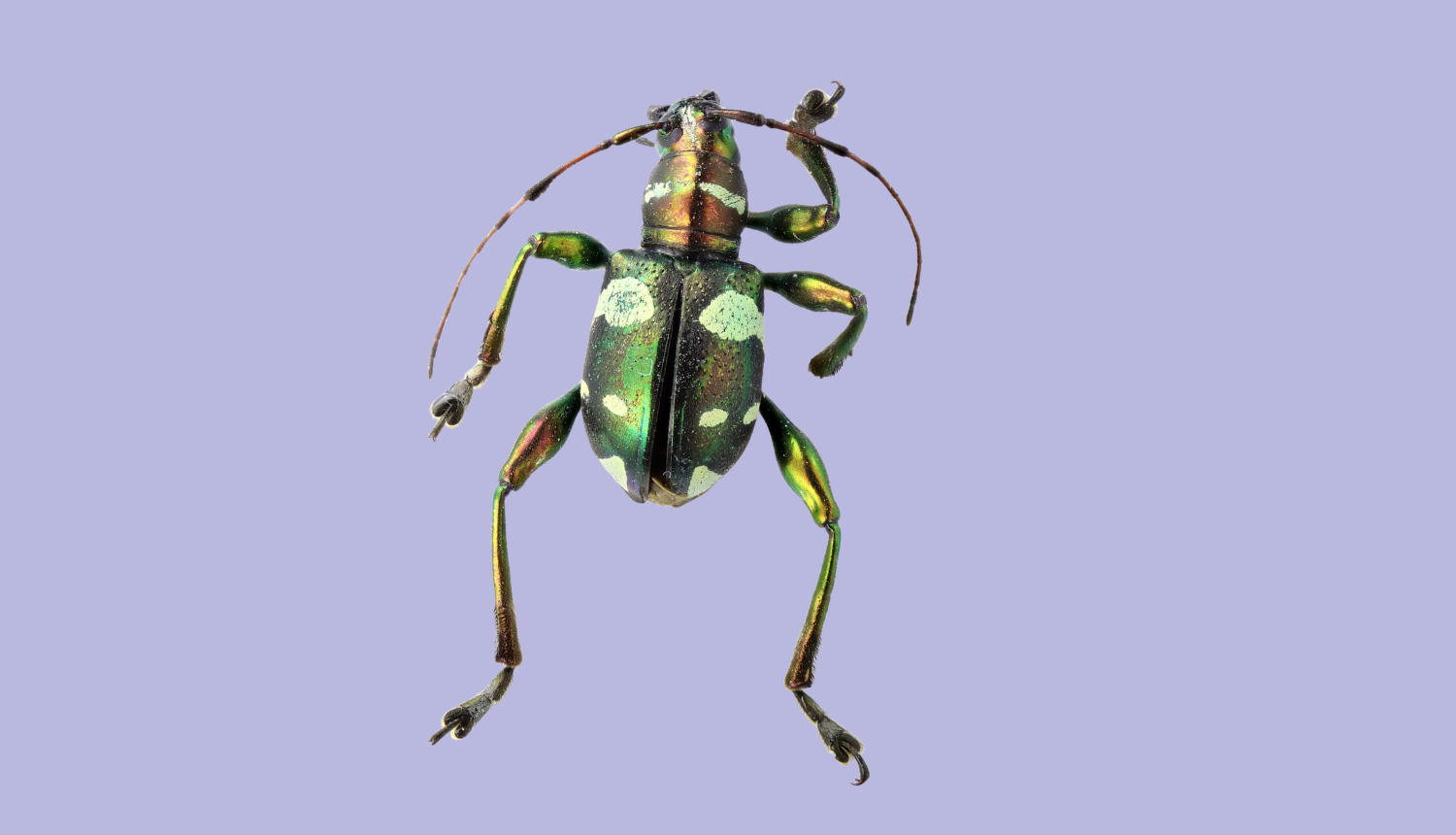
Daugavpils University Entomologist Names Newly Discovered Beetle "Doliops kaupersi" in Honor of Latvian Musician

Author
Daugavpils University / Delfi.lv

February 13, 2025

natural sciences research

It is a long-standing tradition that the scientist who first describes a newly discovered species earns the right to name it. This practice continues with a new longhorn beetle species found in the Philippine archipelago, now officially named Doliops kaupersi in honor of Latvian musician Renārs Kaupers.

The new species has been described and named under the leadership of Latvian biologist, Rector of Daugavpils University, Professor Arvīds Barševskis.

"The time has come for last year's jubilarian Renārs Kaupers' beetle! At the end of 2024, a new species of longhorn beetle, Doliops kaupersi, was described in science, which I dedicate to Renārs Kaupers," writes entomologist Dr. biol. A. Barševskis.
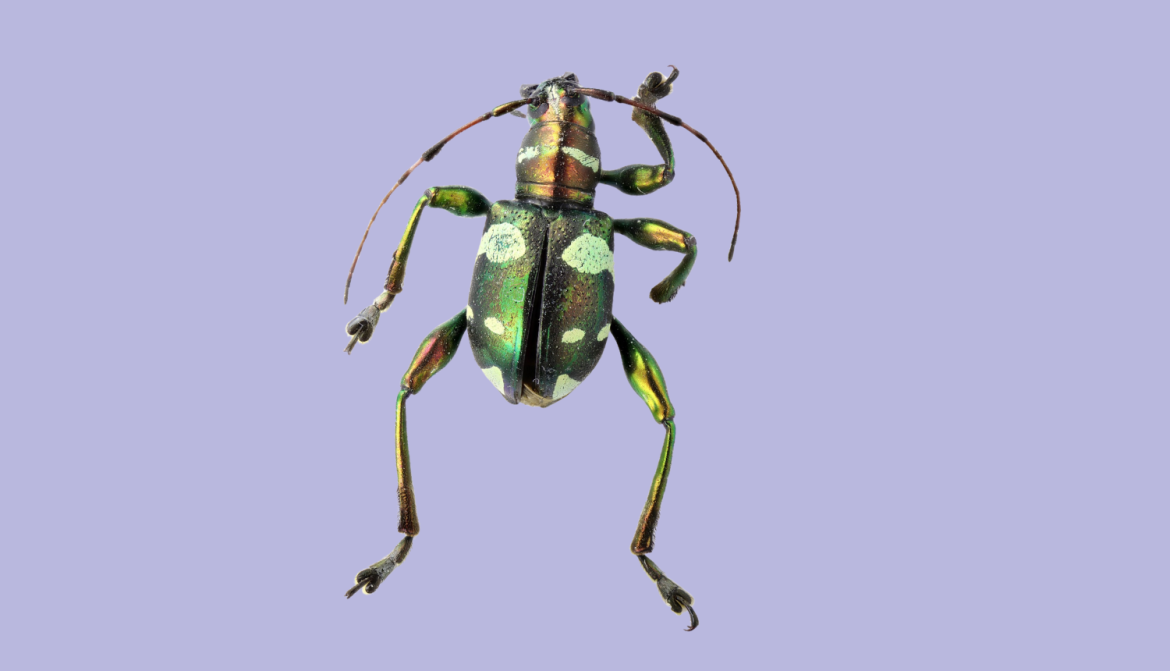
Duolips kaupersi DU.png
The newly identified longhorn beetle Doliops kaupersi Barševskis, 2024. Image: A. Barševskis.

Doliops kaupersi is distinguished by its golden-green coloration and inhabits the Sarangani jungles on the island of Mindanao. All species of the Doliops genus are known for their limited distribution range, leading to the assumption that D. kaupersi is found exclusively in this region. The beetle resides in tree canopies and feeds on leaves, but little information is available about its biology.

Professor Barševskis has previously named newly discovered species after notable Latvian cultural figures. In the past, he has named species in honor of Raimonds Pauls, Imants Ziedonis, Jānis Streičs, and others.

The species description and taxonomic characterization have been published in the scientific journal Baltic Journal of Coleopterology.

Recommended articles

natural sciences

At Akmeņrags Lighthouse, visitors can explore and feel the underwater landscape of the Baltic Sea

Opposite Akmeņrags Lighthouse, moraine elevations form the European Union protected habitat “Stony Reefs in the Sea”, which is one of the most significant protected habitats in the Baltic Sea. The unique underwater relief was formed as a result of glacial activity. In everyday life, it is hidden be…

Dace Kreijere, lsm.lv

September 25, 2026

natural sciences

Latvian polar researchers have returned from their third expedition to Greenland

In August this year, scientists from the Department of Geology at the Faculty of Science and Technology (FST) of the University of Latvia (UL) conducted research on the Fan outlet glacier of the Qaanaaq Ice Cap. During the month-long expedition in north-western Greenland, carried out with support f…

University of Latvia

September 21, 2026

natural sciences science communication

A 300-year-old pigment against radioactive caesium – solutions by University of Latvia scientists

For more than 300 years, Prussian blue has been known as a vivid pigment in art, used by such world-famous painters as Vincent van Gogh, but today this compound has entered an entirely different field of research. University of Latvia (UL) research associate and doctoral student Uģis Eismonts is st…

Radio SWH TV in cooperation with "Rietumu Banka" and the University of Latvia Foundation

September 18, 2026

natural sciences zinātnes komunik

Why Are Wild Bees Important for Agriculture Too? A New Season of “Latvia in Science” Has Begun

Around 300 bee species are found in Latvia, but only one of them – the European honey bee – is widely known to people because it is associated with beehives and honey production. The remaining species are wild bees, and relatively little is still known about their distribution and ecological needs…

Radio SWH TV in cooperation with "Rietumu Bank" and the University of Latvia Foundation

September 17, 2026