Researchers from the Faculty of Economics and Social Development at the Latvia University of Life Sciences and Technologies (LBTU) have begun work on a Horizon Europe program project exploring the role of work integration social enterprises in creating inclusive and sustainable change.

In recent years, the importance of the social economy has become an increasingly relevant topic at the European Union (EU) level, promoting the development of more inclusive and sustainable societies and economies. According to data from the European Commission, 11 million people, or 6% of the EU population, are employed in social economy enterprises or organizations. The social economy has become a significant part of the overall economy - one in four newly established companies in the EU is a social enterprise - demonstrating its potential to drive inclusive and sustainable socio-economic change.
Although the social economy is gaining popularity, there is still a lack of comprehensive studies across Europe that could provide solid evidence of its contribution to building a sustainable and inclusive economy.
“There are relatively few studies on the development of social economy enterprises and organizations, as well as on the factors that influence their long-term effectiveness. Existing research is too fragmented to draw comprehensive conclusions and develop a theory on the impact of social economy organizations in creating inclusive and sustainable socio-economic change,”
explains Dr. sc. soc. Līga Paula, Associate Professor and researcher at the Faculty of Economics and Social Development at the Latvia University of Life Sciences and Technologies (LBTU ESAF).
The researcher also emphasizes the absence of comprehensive policy guidelines that support inclusive and sustainable change within the social economy. Practices for promoting the social economy vary significantly across different countries, making it crucial to develop a multi-level policy framework for this sector to foster inclusive and sustainable socio-economic change. Experience so far has shown that policymakers, both at the national and EU levels, lack the tools necessary to measure the impact of social economy enterprises and work integration social enterprises (WISEs) on both local communities and broader society. Measuring the social impact of such enterprises is particularly challenging; therefore, addressing this issue is one of the project’s key objectives.
According to EU standards, participants in the social economy include associations, foundations, social enterprises, and cooperatives, whose primary goal is to address pressing social or environmental issues while ensuring democratic and inclusive governance. As part of the Horizon Europe project "Multi-level policies and theories on how to leverage Work Integration Social Enterprises for inclusive and sustainable socio-economic transition" (WISESHIFT), researchers will analyze work integration social enterprises (WISEs), which play a crucial role in the social economy.
Work integration social enterprises employ groups at risk of social exclusion, such as long-term unemployed individuals, refugees, former prisoners, persons with disabilities, and other target groups. These enterprises are often pioneers in sectors that drive sustainable economic change. For instance, in the circular economy, WISEs combine job creation for marginalized workers with resource reuse; in agriculture and food production, they integrate employment opportunities with sustainable practices, contributing to rural development. A large number of such enterprises also operate in the social care sector.
“It is essential to examine how WISEs can promote inclusive and sustainable change and to determine what needs to be done at the policy level to foster the development of this sector,” states Dr. sc. soc. Līga Paula.
The project aims to develop strategies and multi-level policies for WISEs, policymakers, and European networks to support the growth of these enterprises, thereby promoting inclusive and sustainable socio-economic transitions. To achieve this goal, researchers will conduct a comprehensive study on WISEs across the 27 EU member states and Serbia, including in-depth case studies of 24 WISEs in eight consortium partner countries. The study will analyze their contribution to inclusive and sustainable ecosystems, focusing on three key sectors: resource recycling, agriculture and food, and community and home care for the elderly. Additionally, the project will carry out a cross-sectoral analysis to identify key organizational factors affecting the sustainability of WISEs. Another project objective is to develop a multi-level policy framework to address challenges in the WISE sector.
Overall, the WISESHIFT project seeks to strengthen the role of social economy organizations as catalysts for systemic change toward more inclusive and sustainable practices in national ecosystems, as envisioned in the EU Social Economy Action Plan.
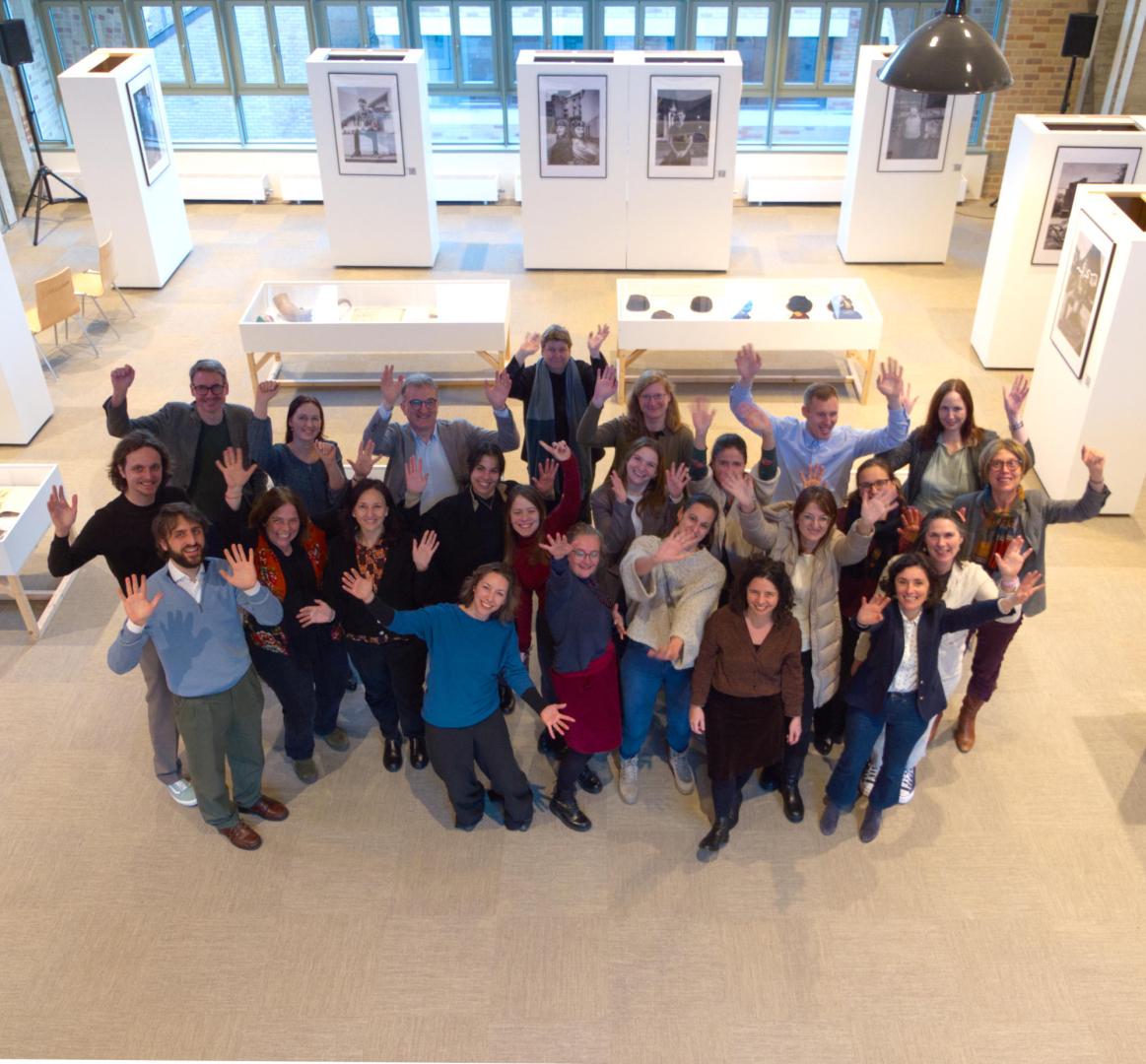
The project will last for four years (2025–2029) and involves 14 partners from both academia and the social economy non-profit sector in Belgium, Germany, the Netherlands, Italy, Ireland, France, Croatia, Serbia, and Latvia. The first partner meeting took place on March 3–4 at KU Leuven in Belgium.